Browse Resources
Engineering Technologies -- Electronics and controls
Resources |
|---|
 This video, made available by the Northeast Advanced Technological Education Center (NEATEC), is part of the NEATEC Electronics II Series from Professor Roger Young. This video describes gain and runs 24:42 minutes in length.
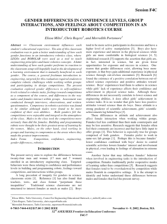 This 8-page classroom evaluation, authored by Elissa Milto, Chris Rogers, and Merredith Portsmore of Tufts University, addresses gender differences between students in a college introduction to engineering class. As summarized in the abstract, "The aim of this classroom evaluation was to gain a...
 This resource, provided by Piedmont Virginia Community College, includes files for a project-based learning module that has students "build the basis for a temperature controlled system that is controlled by a simple microcontroller and temperature sensors." A module handout, an introduction...
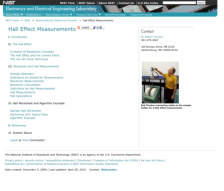 The website is provided by the National Institute of Standards and Technology (U.S.) and provides information on Hall effect measurements. "The objective of this Web site is twofold: (1) to describe the Hall measurement technique for determining the carrier density and mobility in semiconductor...
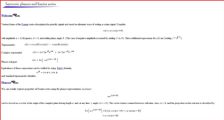 This resource from Johns Hopkins University has audio and interactive components. Various forms of the Fourier series description for periodic signals are based on alternate ways of writing a cosine signal. This resource goes over Phasors, Phasor Sums, Harmonic Phasor Sums, Gibbs Effect, Windowing,...
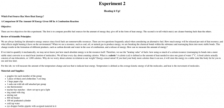 The Materials Science and Technology Teacher's Workshop (MAST) provides this activity to compare the amount of energy given off in combustion reactions. The experiment has two different objectives. The first is the comparison of heat energy given off between different fuel sources and the second is...
 This video, made available by the Northeast Advanced Technological Education Center (NEATEC), is part of the NEATEC Electronics II Series from Professor Roger Young. This video describes the high-frequency amplifier response for the bipolar junction transistor amplifier. The recording runs 56:03 ...
 This video, made available by the Northeast Advanced Technological Education Center (NEATEC), is part of the NEATEC Electronics II Series from Professor Roger Young. This video describes the high frequency amplifier response from the field effect transistor amplifier. The recording runs 23:57...
 The Materials Science and Technology Teacher's Workshop (MAST) provides this lesson plan which will help students understand how temperature affects the conductivity, or resistance, of a variety of electrical materials and devices. The basic scientific principles of heat, metals and semiconductors...
 This resource, provided by Maricopa Advanced Technology Education Center (MATEC), is an animation of a CMOS (complementary metal-oxide-semiconductor) device and how it works. The objective of the animation is to identify the required electrical variables that allow a CMOS device to operate. An .mp4...
|
| ← PreviousNext → |